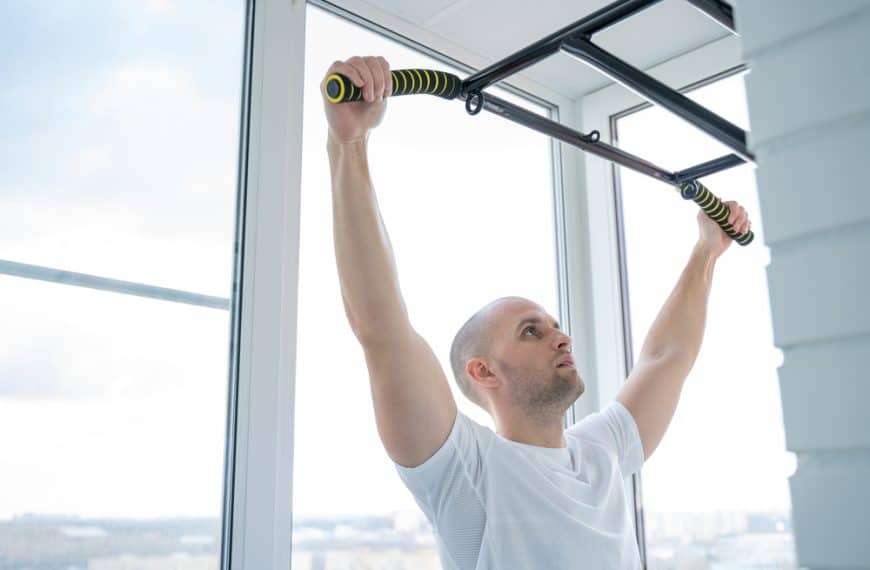
What is the best test of upper body fitness? Powerlifters and free weight enthusiasts worldwide will point to the chest press as the best gauge of a person’s strength. Of course, compound moves like the barbell clean and press also demonstrate the body’s ability to exert upper body power. However, we believe the best way to judge pound-for-pound strength is in the humble pull-up.
Although the pull-up may be the simplest exercises, it’s a perfect gauge for judging overall fitness. The pull-up not only measures strength but also evaluates overall body composition and fitness levels. Just about any fitness regime should include some variety of a pull-up.
When discussing pull-up varieties, you’re spoilt for choice. You can increase the difficulty of a pull-up by making simple changes to your grip. For example, an underhand pull-up is more accessible than a wide, overhand grip. Also, a pull-up is a compound move, meaning multiple muscle groups are targeted including the muscles in the back, the shoulders and of course, in the arms. In particular, your biceps act as a secondary muscle for this pulling move.
With all this in mind, it is essential to incorporate a pull-up regime into your workout. The movement’s simplicity means a variety of pull-up bars can be purchased inexpensively. However, before you rush out and discover a pull-up bar, it’s essential to understand the different types currently available on the market.
This article will look at the various pull-up bar varieties available, discuss the pros and cons of each and make recommendations on who the different bar types are most suited to.
Before we discuss home pull-up bar equipment, let’s first look at the health benefits of pull-ups.
The Health and Strength Benefits of Pull-Ups
Strengthen the Back Muscles
The most obvious benefit of incorporating pull-ups into your workout is the effectiveness of this exercise in building up back strength. As a movement, pull-ups target every muscle in your back. A strong back is vital in sporting performance, strength training, and overall physical health and well-being.
Strengthen the arms and shoulder muscles
As we mentioned in the opening paragraph, the pull-up is a compound movement. Therefore it does not only target your back. It also works out secondary muscles, including your shoulder and arm muscles. In particular underhand pull-ups put extra stress on your biceps and are a great way to increase the strength of your arms.
Increases overall grip strength
As you would expect, few exercises are more effective at increasing grip strength than a pull-up. Grip strength is vital for anyone on a weight training regime. Grip strength is also linked to improving performance in sports like rock climbing, tennis, golf and even bowling. And of course, grip strength helps when we need to open a stubborn jam jar.
Improved overall body strength and fitness levels
Pull-ups are fundamentally a bodyweight exercise. i.e. it is your actual body weight that creates the resistance. Therefore regular pull-ups help to increase your overall fitness levels and strength levels. Strength training promotes bone development and also helps enhance overall cardiovascular health.
Pull-up bar discovering guide
Now that we’ve reinforced the benefits of regular pull-ups let’s discuss the various pull-up bars available for home gyms.
Most pull up bar types fall into the below categories:
- Door frame pull-up bars
- Free-standing pull-up bar
- Wall-mounted pull-up bar
- Ceiling-mounted pull-up bars
- Joist mounted pull-up bars
Let’s discuss each variety in detail.
Door frame pull-up bars
Possibly one of the most inexpensive and easiest-to-install pull-up bars available. As the name suggests, door frame pull-up bars are mounted inside a door frame. The bar pushes against the door frame to create a solid base to perform a pull-up.
The pros of a door frame pull-up bar
The pros of a door frame pull-up bar
- These are probably the most inexpensive pull-up bar variation available
- They are incredibly easy to install and can be removed when not in use
The cons of door frame pull-up bars
- A tall person will need to bend their knees when performing a pull-up
- Sometimes these pull-up bars are unstable and can fall off mid-exercise
- Performing a wide grip pull-up isn’t always possible with these types of bars
We recommend door frame pull-up bars to
- Beginners who are just starting to do pull-ups
- Individuals with limited space
- Those renting a property that can’t make modifications to a wall or ceiling
Free-standing pull-up bars
Free-standing pull-up bars are an excellent choice for those with additional floor space. These pull-up bars can support much more weight than a door frame bar. In many instances, they are also multi-functioning and include additions like dip bars and floor handles for push-ups.
Advantages of free-standing pull-up bars
- Often their size can be adjusted, making them perfect for people of any size
- It can come with additions like dip bars
- Usually robust and easy to set up
Disadvantages of free-standing pull-up bars
- They require quite a bit of floor space and are only suitable for rooms with high ceilings
- A bit more expensive than some other bar options
We recommend free-standing pull-up bars to
- Those with adequate space in their home gym
- Anyone looking for a piece of multifunctional exercise equipment
Wall-mounted pull-up bars
Compared to door frame pull-up bars, wall-mounted pull-up bars are more stable and durable. The size of a wall-mounted pull-up bar means they offer multiple grip types, allowing a person to vary their pull-up.
Advantages of wall-mounted pull-up bars
- They offer multi-grip options for exercise variation
- Very stable and strong
Disadvantages of wall-mounted pull-up bars
- They can be challenging to install, requiring you to drill holes in your wall
- Not suitable for stud walls
We recommend pull-up bars to
- Anyone who needs a very stable and robust pull-up bar
- Those with at least basic DIY skills as these bars require some installation
Ceiling-mounted pull-up bars
Ceiling-mounted bars are similar to wall-mounted pull-up bars, except they are fixed to a ceiling, not a wall. This pull-up bar offers considerable space, allowing a user to complete wide grip pull-ups comfortably.
Advantages of ceiling-mounted pull-up bars
- Offer a massive amount of space, making all pull-up variations possible
- Offers enhanced stability when compared to door-frame bars and floor mounted pull up bars
Disadvantages of ceiling mounted pull up bars
- They can be challenging to install
- Only really suitable for home gyms with high ceilings
We recommend ceiling-mounted pull up bars to:
- Experienced pull-up aficionados
- Those with high ceilings
Joist-Mounted Pull-Up Bars
Considering the unpredictable nature of Irish weather joist mounted pull-up bars are less common in Ireland. These bars are mounted onto wooden pylons that are attached to the ground. These bars are only suitable for an outside environment, although they offer incredible durability and stability. Depending on your DIY credentials, an individual may be able to build this type of pull-up bar at a relatively low cost.
Advantages of joist-mounted pull up bars
- Extremely durable and strong
- Offers the best pull-up experience you’ll get outside of a gym
Disadvantages of joist-mounted pull-up bars
- Only suitable for those with a large garden or outdoor area
- Only those with DIY experience will be able to construct this type of Pull-up bar
We recommend the joist-mounted pull-up bars to:
- Those with a lot of experience using pull-up bars
- Those who adopt a Calisthenics workout routine
As you can see from the above, there are numerous options to consider when purchasing a pull-up bar. No matter what pull-up bar you decide upon, we always recommend discovering local. Ireland has hundreds of sports retailers selling pull-up bars from some of the world’s best sporting goods companies. With GetLocal, it’s easy to compare and contrast pull-up bar types. When shopping for sports equipment, always shop GetLocal.
Exercise Equipment Advice

Overview Part 1: How to Become a Cardio Superstar
Let’s get started with cardio. Every home gym needs at least one dedicated cardio machine. While gyms offer a dizzying…