You know, a barbell should be simple. After all, it’s a steel bar that you put weight plates on. It’s hardly a massive feat of engineering—a tube-shaped bar with a decent grip strong enough to support heavy weights. Easy, right? Why, then, is there a seemingly endless variety of barbells. Walk into any gym, and there’ll be numerous bar shapes with names like Swiss bars, trap bars, and even medieval-looking log bars.
Even a standard straight barbell seems to have a myriad of variations. There are Olympic Weightlifting Barbells, Deadlift Bars and Powerlifting Bars. To the naked eye, these bars look identical. Why then do they have a distinctive category?


 getlocal.ie
Whether you’re in the process of stocking your home gym or want to know which barbell you should be using for which exercises, this article is for you. We will discuss the various barbells and outline the differences between these pieces of kit. Furthermore, we’ll suggest a barbell workout where we recommend the suitable barbell for each movement. But first, let’s discuss the benefits of barbell training.
Benefits of Barbell Training
Improve Strength and Conditioning
As you would expect, a barbell forms the cornerstone of a strength and conditioning program. The wide variety of exercises performed with a barbell means it’s a truly full-body piece of exercise equipment. Everyone from cross-fitters to powerlifters use barbells to become stronger and fitter.
Barbells Improve Athletic Performance
All athletes can supplement their training with a finely-crafted barbell routine—barbells teach individuals how to use all their muscle groups in tandem. The resistance created by the bar and weight plates helps improve strength and endurance levels. Specific exercises like deadlifts, snatch and cleans and overhead presses help to develop power. These sudden bursts of strength are essential in games like Rugby, Gaelic Football, Soccer and Hurling.
Great for Cardio Workouts
Barbells aren’t exclusively for strength training; they’re also an invaluable tool for cardiovascular fitness. CrossFit workouts use low weights and emphasise fast, powerful reps, increasing the heart rate. Movements like Olympic lifts that engage the entire body have tremendous cardiovascular benefits.
Barbells Improve Posture
Many barbell exercises work the back and the shoulders. If these exercises are performed correctly, they can help improve a person’s overall posture. Secondary muscles like the abdominals are engaged in most barbell lifts. A strong core helps to prevent slouching, which helps prevent lower back pain.
Versatile
As we touched upon, the barbell is an incredibly versatile tool. Almost any training regime will likely include at least one or two barbell-centric exercises. If you’re building a home gym, a barbell is essential.



Barbell Types
Now that we have a better idea of the benefits of barbell training let’s discuss the various barbell types. Most barbells fall into one of the below categories.
- Standard Barbell
- Hex or Trap Bar
- Olympic Weightlifting Barbell
- Swiss or Football Bar
- Safety Squat Bar
- EZ or Curl Bar
- Log Bar
- Deadlift Bar
- Powerlifting Bar
Let’s discuss each in a little bit more detail.
Standard Barbell
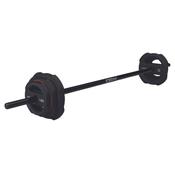
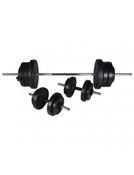
Standard in name and standard by nature, this barbell is the most ubiquitous of all. When you walk into a gym, the barbell you see on a. squat rack or a bench press is a standard barbell. These barbells can weigh anywhere from 15 kg to 20 kg. Every weight lifting exercise can be performed with a standard barbell.
Hex or Trap Bar
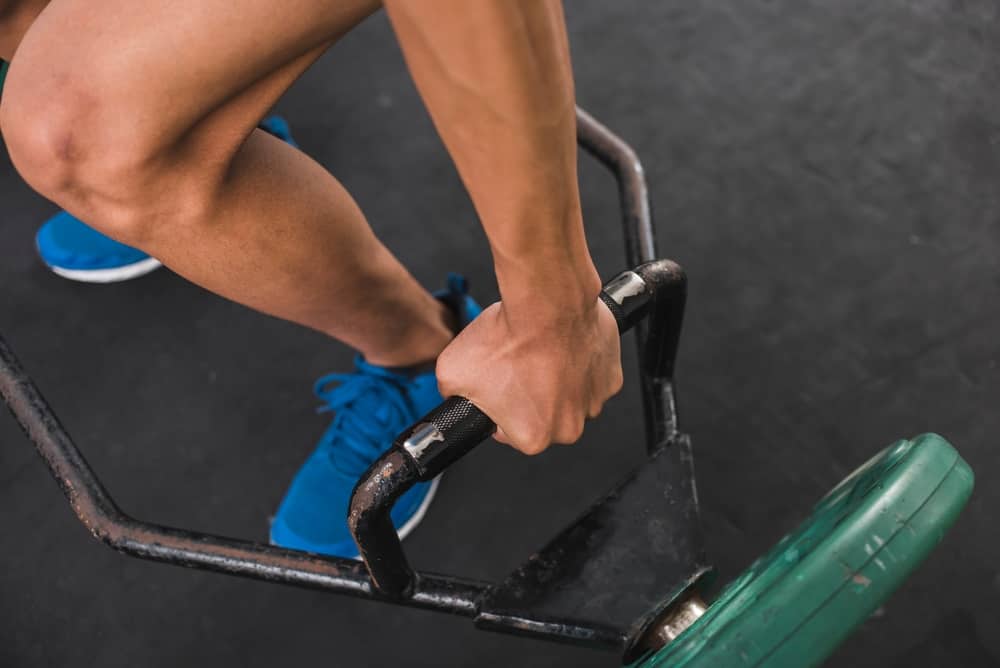
or anyone who feels that performing a deadlift with a standard bar puts too much pressure on a lower back, the Trap bar may be for you. This unusually shaped bar allows a lifter to stand inside it. Two handles are by the weight plates, which are held while lifting. As mentioned, the Trap bar is perfect for deadlifts as it allows you to be slightly more strict with form. They are also the barbell of choice for performing farmers’ walks with heavy loads. These bars are usually a little bit heavier than your typical barbell. However, because of the unusual shape, few exercises can be performed with this bar.
Olympic Weightlifting Barbell
At a glance, the Olympic weightlifting barbell looks identical to a standard barbell. However, it is not the aesthetics but the build that makes this bar different. As the name suggests, these are Olympic standard barbells. The significant dissimilarity between these bars and standard barbells is the bar collars, i.e. the thick parts of the bar where you add the weight. On an Olympic weightlifting barbell, the bar collars are fatter. This can be an issue as not all plates will fit. Olympic barbells also have additional flex, meaning they bend and snap back to shape during lifts.
Swiss or Football Bar
The Swiss or football bar is one of the most unusual barbells out there. These barbells allow people to grip a barbell with a neutral grip (with their palms facing in.) These bars are great for anyone with limited upper body mobility. Genuinely there are used for people who may have shoulder injuries and need to be particularly careful when performing lifts. These bars are quite small and therefore have a limited load capacity.
Safety Squat Bar
Certainly, one of the more unusual barbells is the safety squat bar. The safety squat bar includes two handles with padding that are held during a squat. This improves the stability of the barbell throughout the movement allowing a person to concentrate on their form. The safety squat bar is only really suitable for lower body workouts like back squats, lunges and split squats.
EZ or Curl Bar
Almost as ubiquitous as the standard barbell in gyms is the EZ curl bar. As you would expect, this bar is for bicep curls and tricep extensions. EZ bars are typically skinny, and their bent design means they are much more comfortable to hold when performing arm exercises. The bar allows a person to vary their arm workout by allowing wide and narrow grips. These are small bars, so they have a limited load capacity.
Log Bar
Another black sheep of the barbell family is the log bar. These bars look like something from a strong man competition. Log bars are purely used to increase strength and are more often than not found in speciality gyms. This bar is for curls, overhead presses and back rows. Its unusual shape means it has limited versatility.
Deadlift Bar
From an aesthetic point of view, the deadlift bar looks like a standard barbell or an Olympic barbell. However, a few key differences optimise this bar for deadlifts. They have a thin, extended handle. This length increases the bar’s flex or bending level, so hands are usually higher when performing a deadlift. The rivets on a deadlift bar are typically deeper, allowing for superior grip. Better grip is essential for anyone hoping to increase their deadlift personal best.
Powerlifting Bar
Again, if we go just by aesthetics, the powerlifting barbell looks remarkably like an Olympic or deadlift barbell. However, a few key differences optimise this barbell for powerlifters.
Like Olympic bars, these bars have thick collars; however, they are built to be much more rigid, meaning they have very little flex when lifting even the heaviest loads. A lack of flex means powerlifters don’t have to worry about the bend and snap effect of an Olympic or deadlift barbell, allowing them to concentrate on form.
More Exercise Equipment Advice

Overview Part 1: How to Become a Cardio Superstar
Let’s get started with cardio. Every home gym needs at least one dedicated cardio machine. While gyms offer a dizzying…