Rock climbing is exciting, adrenaline-inducing, and brilliant for breathtaking views. Multiple spots around Ireland provide a diverse range of sights. You can take in the city views in Dalkey Quarry, Co. Dublin or hang over the sea cliff in Ailladie, Co. Clare. You can soak in the culture while climbing the cliffs in Doolin, Co. Clare or conquer the boulders in Glendalough, Co. Wicklow. No matter where you climb, taking your journey to new heights is just the beginning. Check out our curated list of rock climbing essentials to ensure you have everything you need for your ascent.




- Book Lovers
- DIY Gifts
- Family Members
- Fitness Superstar
- Foodie Gifts Guide
- Games Players
- Gifts Under €100
- Gifts Under €50
- Health and Wellness Gifts
- House Proud and Aspiring Interior Designer Gifts
- Outdoor Adventure People
- Pet Parents Gifts
- Photographer Gifts
- Plant Lovers
- Sport Fanatics
- Tech Geeks
- Teens
Climbing Shoes
Rock climbing shoes are critical as the ‘sticky rubber’ of the sole provides a level of traction unlike any other type of shoe. The traction allows climbers to stand on barely-perceptible imperfections on an otherwise blank rock.
Chalk and Chalk Bag
When climbing to new heights, sweat is inevitable. With all that extra moisture, chalk will help you still keep your grip. A quick tip: dip your hands in the chalk before you start your limb for better sweat absorption. Don’t forget the chalk bag that will hang on your side for easy access.
Harness
Climbing harnesses are not only used for safety but also feature handy little loops that allow you to clip on additional gear for easy access while on the move. When picking out a harness, remember that it should be lightweight, affordable, and well-padded.
Belay Device
The Belay device is another essential accessory for climbing safety. The belayer’s quick braking hand helps keep tension on the rope and helps protect you as well.
Quickdraws
Quickdraws, also known as anchors, are clipped into bolts on the wall and clipped to your rope. This is done for your protection if you were to fall. It is recommended for an entry-level rock climber to bring along a minimum of eight quickdraws.
Locking Carabiners
Locking carabiners connect to your sling when you clean an anchor. The ‘pear-shaped’ locking carabiners are preferred for belaying, and the oval-shaped ones are more user-friendly with slings and anchors. Climbers often use locking carabiners with a gate that locks shut whenever they want to ensure that nothing comes unclipped from the carabiner. A sling is often used with a carabiner when cleaning an anchor at the top of a climbing route. It allows you to remove your quickdraws from the other anchor and thread your rope through the rings before repelling down a route.
Climbing Rope
The climbing rope is a critical part of the extensive chain of protective equipment mentioned above. This includes the climbing harness, quickdraws, belay devices, and carabiners. All of these parts work together to help prevent potentially fatal fall-related accidents. A climbing rope can get expensive, so keep in mind that price doesn’t have to be the main focus when starting. Be sure to grab a rope bag to make it easier to carry.
Helmet
Bringing a hiking helmet is self-explanatory, as you want to ensure your head is fully protected from rock debris or a fall. It is also protected from overhanging rocks while climbing. When choosing a helmet, be sure that it is easily adjustable and stable on your head.
Climbing Pack
A climbing pack makes hauling all this gear to and on your next climb much more manageable. A hydration pack is excellent if you prefer long, face-climbing routes in stable weather. If you are getting into rock climbing, using a hiking backpack will suffice while you figure out precisely the kind of hiking pack you will need.
More Discovering Guides
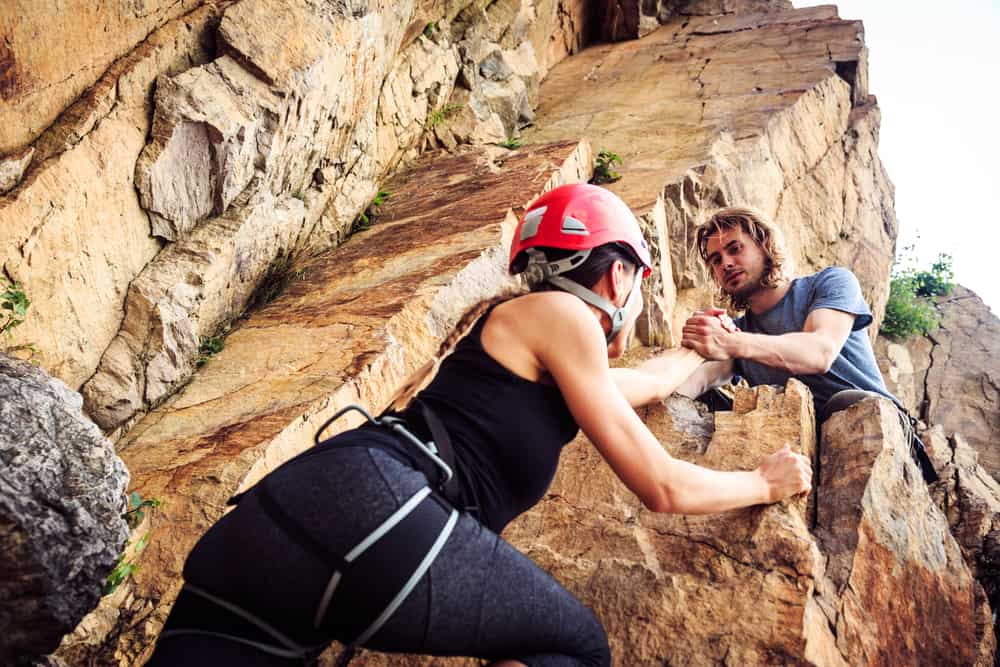
Rock Climbing Essentials
Rock climbing is exciting, adrenaline-inducing, and brilliant for breathtaking views. Multiple spots around Ireland provide a diverse range of sights.…