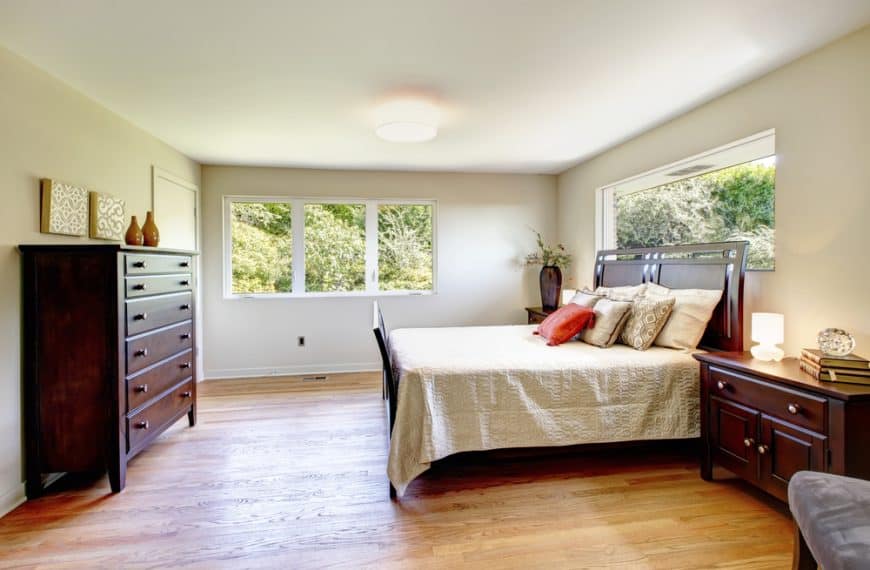
For as long as people have been wearing clothes, there’s likely been some clothing storage furniture. It’s impossible to know for sure, but it’s reasonable to assume our Neanderthal cousins built a place to store their loincloths after a long day of wholly Mammoth hunting. The history of furniture quite literally spans centuries. Evidence of wooden furniture has been discovered at various archaeological digs worldwide; some of these sites are over 2700 years old. Of all the furniture we still use today, the chest of drawers is probably one of the most ancient clothing storage solutions available. The chest of drawers dates back to at least 180 AD.
The road to the modern chest of drawers is surprisingly more complicated than you might think. In this article, we will look at the history of the chest of drawers to give us a deeper appreciation for this ubiquitous piece of bedroom furniture.


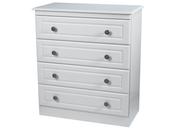

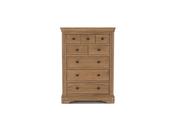
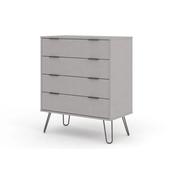

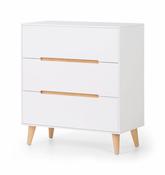

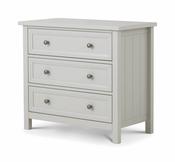
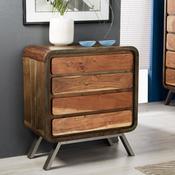
 getlocal.ie
The Ancient History of the Chest of Drawers
Information on the very earliest examples of chest of drawers is, as you would expect, somewhat sketchy. For some reason, ancient writers were more interested in writing about wars and royalty than in writing about bedroom furniture. Despite this oversite by our literary-minded ancestors, one historical figure is accredited as the inventor of the chest of drawers.
Most historians agree that the Chinese Physician Hua Tuo invented the chest of drawers. The actual date of this earth-shattering breakthrough isn’t known, but it was sometime between 180 AD and 208 AD. Unlike the chest of drawers of today, Hue wasn’t using his drawers to keep his underwear and socks separated. As a doctor, Huo filled individual drawers with medicines. To this end, Huo didn’t build the long spacious drawers we associate with today’s chest of drawers. Instead, he favoured smaller compartments that made it easy for him to segregate his powders and potions. Because of this, Hue’s invention was referred to as the “Hundred Drawers.”
History being history, we can’t draw a direct link between Hue’s Hundred Drawers and a chest of drawers. There are centuries of development to go before we can begin to see pieces that resemble what is sitting in your bedroom right now.
Putting the Chest in a Chest of Drawers
The chest of drawers we recognise today has more in common with the Egyptian chests of the 18th Dynasty than Huo’s a hundred drawers. These Egyptian chests predate Huo’s invention by a couple of hundred years. Egyptian craftspeople created simple crates with ornate exteriors that they used to store various goods like clothes and food. There is scant evidence to suggest that these chests, fitted with legs, spread throughout Europe. But we know that the skills and techniques used to create ancient Egyptian trunks were lost during the Middle Ages.
The Lack of a Chest of Drawers During the Middle Ages
The dugout was the most common furniture used to store everything from clothes to medicines during the Middle Ages. Before you ask, the Middle Ages dugout has nothing in common with the little hut where subs warm benches during football games.
The Middle Ages dugout was a tree trunk crudely hollowed out and used for storage. Frequently these dugouts were fitted with a simple lid. Iron bands were placed inside the dugout to stop the wood splitting.
As you would expect, dugouts weren’t fit for purpose. Gradually, they were replaced with chests built from wooden boards. Some of these chests still survive and can be viewed in various mediaeval churches across Europe.
At the end of the Middle Ages, chest construction gradually became more sophisticated. Iron bands were fitted along the chest to increase the strength of the wooden frame. Hinges appeared on lids, and lock systems became increasingly common.
The Chest of the 13th Century Onwards
While the late middle age chest looked a lot like the chests of today, they were simple and functional in design. It took until the 13th century for the French to begin decorating trunks. The plain boards that made up the chest structure were decorated with wrought iron scrolls and extremely elaborate designs. Some of the most decadent of these chests still survive today. One particularly well-preserved example can be viewed at the Museo de Artes Decorativas at the Palacio de la Virreina in Barcelona.
The trend for decorating chests continued in the following centuries. The artistic styles took cues from architecture. Chest designs often fell into distinctive Romanesque styles and gothic styles. The designs on these chests often depicted a story from myth or a dramatic scene like jousting Knights.
The chest remained a popular piece of furniture, especially for nobility, well into the 16th century. Trunks also spread from Europe into the Americas. Classical chests from the late 17th century have been discovered in Massachusetts. Numerous examples of 18th-century embroidered chests can be found in Pennsylvania; many of these examples were brought from Europe to America by German immigrants.
Development of the Chest of Drawers
By the 17th century, the chest had evolved to include legs and small drawers at the base. At this stage, chests were extremely close to what we now refer to as a chest of drawers. The switch from a chest to a chest of drawers can be traced to England.
When we get to 1680, the typical chest was now made up of drawers instead of 1 compartment. These compartment chests usually had three long drawers, topped by two smaller drawers that sat side by side. Specific models included flat side chests that, when pulled down, created a table space.
At the same time, in France, a version of the chest of drawers was becoming common with Parisian nobility. They were referred to as a commode. These highly decorative pieces had marble tops and were fitted with lavishly decorated doors that sat on either side. Commodes also had grand bronze designs. Most commodes avoided harsh corners and with generally curved or slightly convex in shape.
As furniture design moved into the 18th century, carpenters modified the rectangular lines of chests of drawers with bevel corners to give pieces a more rounded aesthetic. Serpentine fronts also became popular. As the centuries passed, wooden handles came in and out of fashion. By the 19th century, metal or steel handles were the most common feature of a chest of drawers.
Chest of Drawers in the Modern Day
Until the 1950s, most chests of drawers were made from solid wood. They were built from scratch by carpenters and delivered to customers in one piece. That was until a Swedish man named Gillis Lundgren had trouble loading a table into a car.
Lundgren worked for a little-known furniture store called IKEA. While attempting to load a table into his car, Lundgren found it was easier to transport the table if he removed the legs. Thus flat-pack furniture was born.
Today most furniture is flat pack. So must chest of drawers comes in pieces. This dramatic switch in furniture assembly has dramatically affected the look of the Chest of Drawers.
Pieces from the 1950s to around the 1980s were typically large, bulky and made from solid wood like mahogany. A flat-pack chest of drawers is often made from recycled material. The aesthetics are often minimalistic and function forward.
Flat-pack furniture’s popularity has recently shifted back to solid furniture. The up-cycling trend – where old pieces of furniture are re-purposed – has seen older chests of drawers get restored or updated.
Hopefully, this article has given you a deeper appreciation of the long and surprisingly diverse history of the chest of drawers. When considering purchasing a chest of drawers for your bedroom, hallway, or living room, we highly recommend checking out GetLocal. GetLocal is the only place you can be sure you’re purchasing furniture like chest of drawers directly from Irish retailers. It also allows you to compare product prices and delivery costs from one location.
When you’re looking for your next furniture piece, discover local with GetLocal.ie
Your Guides To Bedroom Furniture
Diving Deep into King-Size Beds
To quote the American comedian Ray Romero: “For the sake of your marriage, get a king-size bed. And if you…