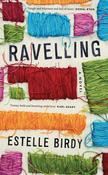
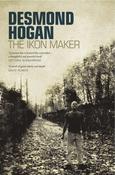
'When I was sent by the Soviet state to London to further my studies in calculus, knowing I would never become a great mathematician, I strayed instead into the foothills of anthropology.'
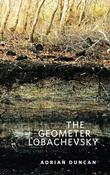
It is 1950 and Nikolai Lobachevsky, a Glav Torf mathematician and great-grandson of his illustrious namesake, is aiding Bord na Móna by surveying a bog in the Irish Midlands. Far from home, he studies the locals and the land. One afternoon, soon after he arrives, he receives a telegram calling him back to Leningrad for a ‘special appointment’. Lobachevsky may not be a great genius but he is not foolish: he recognises a death sentence when he sees one and leaves to go into hiding on a small island in the Shannon estuary, where the island families harvest seaweed and struggle to split rocks. Here Lobachevsky must think about death, how to avoid it and whether he will ever see his home again.
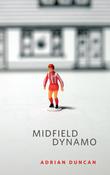
Following Duncan’s critically acclaimed Love Notes from a German Building Site (2019), A Sabbatical in Leipzig (2020) and Midfield Dynamo (2021), Duncan’s themes of emigration, displacement and work connect Ireland with the world stage. Colm Tóibín said of Love Notes: ‘Written in spare, exact prose … Duncan writes beautifully about cold weather, gruff manners, systems of hierarchy … A portrait of work [and] a picture of a sensibility.’
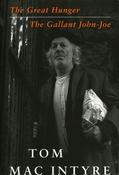
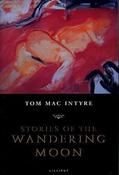
The Great Hunger, Tom Mac Intyre’s internationally celebrated play of 1983, and The Gallant John-Joe, his most recent dramatic work, show Mac Intyre to be one of the most daringly and excitingly original Irish writers working today.
The Great Hunger is Mac Intyre’s version of Patrick Kavanagh’s long poem of the same name. It represents the life and dreams of Patrick Maguire, Monaghan small farmer and potato-gatherer, a man suffering from sexual and spiritual starvation. The play fuses image, movement and language into a classic of contemporary Irish drama.
The Gallant John-Joe is the soliloquy of John-Joe Concannon, a Cavan widower grappling with physical and mental infirmity and trying unsuccessfully to plumb the mysteries of his relationship with his troubled daughter. His Lear-like cry, by turns tragic and uproariously funny, is both instantly recognizable and marvellously strange, a creation only Mac Intyre could have brought to the stage, and the page.
‘The poem is about the way I was brought up. We’re talking about my life. It isn’t a penal poem lodged in the 1940s and 1950s. This is a poem about Ireland, saying at least in one aspect, “What are we going to do about the Patrick Maguire inside us?” Being brought up in Ireland everyone is affected by that malady of “Don’t touch me and I may not touch you.’ – Tom Mac Intyre