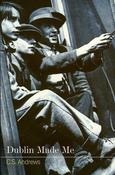
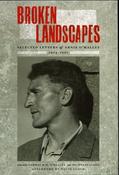
Dublin Made Me, the first of C.S. (‘Todd’) Andrews’ two celebrated volumes of autobiography, describes in loving detail the pre-independence Dublin in which the author grew up and provides a vivid participant’s account of the War of Independence and the Civil War. Born in 1901, Andrews lived with his family in Summerhill until 1910, when they moved to the distant suburb of Terenure.
Andrews’ account of the two Dublins of his youth – the bustle, intimacy and poverty of the north side, and the bucolic pleasures of Terenure- is an unsentimental urban pastoral, sensuous and immediate. He describes his schooling with the nuns in Dominick Street, with Patrick Pearse for an unhappy year in St Enda’s, and then with the Christian Brothers in Synge Street. And he gives a rich, detailed account of his apprenticeship in Irish republicanism, from his pre-1916 experiences as a youthful ‘camp-follower of the Volunteers’ to his active service in Dublin in the War of Independence and his dangerous days as adjutant to Liam Lynch, chief of the anti-Treaty forces during the Civil War. Andrews writes dispassionately of internment and hunger-strikes, and of the bitter divide between the pro-and anti-Treaty sides, once comrades-in-arms.
Dublin Made Me is a unique account of an ordinary childhood transformed by war and revolution. Together with its sequel, Man of No Property, it provides an unmatched first-person chronicle of the making of twentieth-century Ireland.
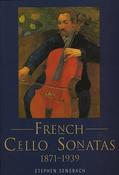
The years between the end of the Franco-Prussian War and the start of the Second World War witnessed a renaissance of French instrumental music and an evolution from the elegance of Saint-Saens to Debussy’s revolutionary style and beyond. This pioneering study surveys one hundred published cello sonatas and thirty-seven unpublished sonatas written by French composers during this fertile period. It brings to light many unknown works and provides new perspectives on those that are better known.
Sensbach presents the historical background of each piece and provides biographies of the composers. There are also biographies of cellists and pianists of the period, many of whom were well known at the time but have since faded into undeserved obscurity. Technical information – including a listing of keys and time signatures, an example of the opening measures, dates of publication and library locations – is provided for each sonata. A brief description is made of each movement, covering form, style and level of difficulty for the performers. Where possible, excerpts of original reviews and comments from the composers letters have been included. The book is richly illustrated with contemporary photographs and drawings, many published here for the first time.
French Cello Sonatas 1871-1939 is a treasure trove for cellists, cello enthusiasts, and anyone interested in the music of the age of Debussy and Ravel.