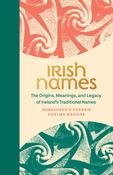
Irish Names is a fascinating exploration of Ireland’s rich naming heritage, offering nearly nearly a thousand authentic names drawn from the annals, genealogies, mythology and historical literature of early medieval Ireland. Carefully curated by esteemed scholars Donnchadh Ó Corráin and Fidelma Maguire, this book is both a practical resource for name selection and a cultural treasure trove. Each entry includes historical context, linguistic origins, meanings, anglicised forms, and connections to saints, kings or legendary figures.
From the noble strength of Áed to the poetic elegance of Áine, Irish Names reveals the cultural depth and historical resonance behind traditional Irish names. With thoughtful commentary and a comprehensive index, this volume is essential for anyone interested in Irish heritage, genealogy, or the enduring power of names to carry identity across generations.
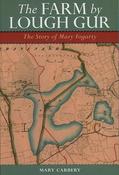
The Farm by Lough Gur was first published in London in 1937 and quickly reprinted. It was well received in England and a best-seller in Dublin. Some questioned its quiet recall of an elysian rural Ireland before the Land War, its image of a contented Victorian world in the rich lands of east Limerick that rather jarred with the rhetoric of De Valera’s Ireland. Its woodcut images seemed English not Irish, and its ambiguous authorship gave ammunition to the doubters – was this really the voice of old Mary Fogarty, née O’Brien, or the heavily edited text produced by an Anglo-Irish friend and littérateur, Mary Lady Carbery?
The text was indeed crafted by Mary Carbery, a sharp observer and accomplished essayist who published a fine memoir of her own childhood in 1942 (Happy world). But the pungent strength of the book rests on Mary Fogarty’s contribution: the draft notes and papers that she sent over to Mary Carbery, fleshed out by information supplied by other members of the O’Brien clan. Her memories provide what remains an entirely convincing account of the lost world of the strong-farm family in post-famine Munster, one far more secure in its social status than that of other Catholic writers such as Charles Kickham or Canon Sheehan.
Over seventy years later, there are still precious few histories and even fewer fictional accounts of that rural Catholic middle class like the O’Briens, who confidently expected to be the inheritors of the earth in a Home-Rule Ireland. Their world has rarely been evoked so sensitively as in this beguiling and most engaging narrative.