- Home
- Directory Categories
- Media
- Books
- Making History

 ✓ In Stock
Gutter Bookshop
Bismarck's War : The Franco-Prussian War and the Making of Modern Europe by Rachel Chrastil (Paperback)
Dublin 2 dublin
 ✓ In Stock
Gutter Bookshop
Spectral Mansions : The making of a Dublin tenement 1800-1914 by Timothy Murtagh
Dublin 2 dublin
 ✓ In Stock
Gutter Bookshop
The Edge of the Plain : How Borders Make and Break Our World by James Crawford (Paperback)
Dublin 2 dublin
 ✓ In Stock
www.thebookshop.ie
D.G Boyce - Englishmen and Irish Troubles : British Public Opinion & The Making of Irish Policy 1918-22 - HB
tipperary
 ✓ In Stock
www.thebookshop.ie
R. F. Foster - The Irish Story : Telling Tales and Making It Up in Ireland - HB - SIGNED
tipperary
 ✓ In Stock
Schoolbooks.ie
Éire Á Múnlú - The Making of Ireland - Irish Edition - 3rd / New Edition (2024)
galway




 ✓ In Stock
Bookstation
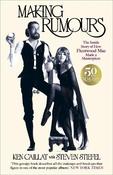
Making Rumours: The Inside Story of how Fleetwood Mac Made a Masterpiece
Dublin 14 dublin
 ✓ In Stock
Gutter Bookshop
Zonal Marking : The Making of Modern European Football by Michael Cox
Dublin 2 dublin


 ✓ In Stock
Gutter Bookshop
No Foreign Game : Association Football and the Making of Irish Identities by James Quinn (Large Paperback)
Dublin 2 dublin
 ✓ In Stock
Gutter Bookshop
The Viking Great Army and the Making of England by Dawn Hadley & Julian Richards (Hardcover)
Dublin 2 dublin
 ✓ In Stock
Secret Book and Record Store The
Making the Cut: Stories of Sartorial Icons by Savile Row's Master Tailor; Richard Anderson
Dublin 2 dublin
 ✓ In Stock
Gutter Bookshop
The Visionaries: The Making of the Post World War II Order in the West by James Holland (Large Paperback)
Dublin 2 dublin
 ✓ In Stock
www.thebookshop.ie
Laurent Bouzereau / The Making of the Phantom Menace ("Star Wars Episode One") (Coffee Table Book)
tipperary
 ✓ In Stock
Secret Book and Record Store The
The Making of Inequality: Women, Power and Gender Ideology in the Irish Free State, 1922-1937; Maryann Gialanella Valiulis
Dublin 2 dublin
Other Offers Available

 ✓ In Stock
Vibes & Scribes
Sapiens: A Graphic History, Volume 3: The Masters of History by Yuval Noah Harari
cork






















 ✓ In Stock
Gutter Bookshop
The Power of Ethics : How to Make Good Choices in a Complicated World by Susan Liautaud
Dublin 2 dublin
 ✓ In Stock
Gutter Bookshop
The Making of Another Major Motion Picture Masterpiece by Tom Hanks (Paperback)
Dublin 2 dublin
 ✓ In Stock
www.thebookshop.ie
Cheryl Owen / The Practical Handbook of Card-Making (Coffee Table Book)
tipperary