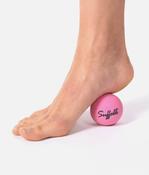
Soothe your tired feet and enhance your dance performance with the Suffolk Dancer's Massage Ball. Specifically designed for dancers, this compact and convenient massage ball provides targeted foot therapy, helping you stay on your toes and perform at your best.
Dancer's Massage Ball, How to Use:
For Foot Massage: Place the massage ball on the floor and gently roll it under your foot, applying pressure as needed. Focus on areas of tension and soreness, and spend extra time on any specific pain points.
For Other Muscles: Use the ball to target sore muscles in your back, shoulders, or hands. Apply gentle pressure and roll the ball over the affected area for a deep tissue massage.
Why Dancers Love It
On-the-Go Recovery: Portable and quick to use between barre, rehearsal, or shows
Targeted Relief: Focuses on tension points in the arch, heel, or metatarsal area
Versatile Use: Also great for tight shoulders, wrists, or forearms
Injury Prevention Tool: Helps improve circulation, reduce soreness, and aid flexibility
Dance Bag Must-Have: Compact size fits in even the smallest pouches
- Making Services Better with the VIPS Framework
What is person-centred dementia care, and how can it be used to improve care for people from diagnosis to end of life? How can we improve services in people's own homes, in care homes, in supported housing and in hospitals? This substantially updated second edition considers recent developments in person-centred care, presenting refreshed guidelines for practice.
Dawn Brooker and Isabelle Latham explain the evolution of the key principles of person-centred care that comprise the VIPS model. They describe how it has been applied in diverse service settings, and show how to put the model into practice. A new chapter dedicated to culture of care will help service managers to get to grips with this slippery concept, and includes important information on how to guard against neglectful practice. Case studies from the CHOICE programme, a research project on culture of care, demonstrate the key factors that are important for people living with advanced dementia and complex needs to live well.