Site Selection and Planting Requirements
Light Tolerance: Taxus baccata is highly adaptable and can grow in full sun to deep shade. It is one of the few conifers that tolerates heavy shade well, making it ideal for north-facing areas.
Soil Preferences: Prefers well-drained, fertile soil but is tolerant of a wide range of conditions including chalky, sandy, and clay soils. Avoid areas with waterlogged or overly compacted soil.
Moisture Requirements: Once established, English Yew is drought-tolerant. However, young plants require regular watering during their first two years to ensure healthy root development.
Planting Time: Best planted in autumn or spring. Container-grown specimens can be planted year-round, provided the soil isn’t frozen or waterlogged.
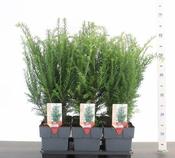
Spacing: For hedging, plant 2 to 3 feet apart depending on desired density. For specimen planting, give each plant 6 to 10 feet of space to reach its natural spread.
Shelter Needs: Tolerant of wind and urban pollution, but benefits from some shelter in exposed sites, especially when young.
Maintenance, Pruning, and Long-Term Care
Watering: Newly planted yews need consistent watering in dry periods. Established plants typically require little supplemental water, except during prolonged droughts.
Feeding: Apply a balanced general-purpose fertilizer in spring to encourage healthy growth. An annual mulch of compost or well-rotted manure also helps maintain soil health and moisture.
Mulching: Mulch around the base in early spring to suppress weeds and retain moisture. Keep mulch away from the trunk to prevent rot.
Pruning: Tolerates heavy pruning and can be trimmed into formal shapes or maintained as a hedge. Prune in late summer or early autumn. Old wood can be cut back to rejuvenate overgrown plants, as yew readily re-sprouts from older stems.
Training and Shaping: Excellent for topiary and architectural forms. Begin shaping from a young age, and prune annually to maintain sharp edges and defined forms.
Pe
Fagus sylvatica – Planting & Care Guide
About Fagus sylvatica
Fagus sylvatica, commonly known as Common Beech or European Beech, is a magnificent deciduous tree native to much of Europe and widely grown in Ireland as both a specimen tree and a highly effective formal or informal hedge.
Beech is particularly valued for its attractive fresh green spring foliage, which matures to deep green during summer before developing beautiful golden-yellow, copper and bronze autumn colours. When regularly clipped as a hedge, much of the dry copper-brown foliage is retained throughout winter, providing useful screening until fresh leaves emerge in spring.
Left unpruned as a tree, Fagus sylvatica eventually develops into a large, impressive specimen with a broad crown and distinctive smooth grey bark.
Planting Guide
Plant in full sun or partial shade.
Prefers fertile, moist but well-drained soil.
Performs well on many clay and loam soils.
Avoid permanently waterlogged ground.
Beech can struggle on extremely wet sites; Hornbeam is usually a better choice for wetter soils.
Dig a hole approximately twice the width of the root ball.
Plant at the same depth as previously grown.
Firm the soil gently and water thoroughly.
Apply an organic mulch around newly planted trees or hedges.
Keep the immediate planting area free from weeds and grass during establishment.
Planting as a Hedge
Fagus sylvatica makes an outstanding long-lived hedge.
For a single-row hedge, plant approximately 3–4 plants per metre, depending on plant size.
For a particularly dense hedge, plants can be arranged in a staggered double row.
Water thoroughly after planting.
Keep newly planted hedging well watered during dry periods for the first couple of growing seasons.
Lightly trim young plants to encourage dense branching.
Regular trimming helps Beech retain its characteristic copper foliage during winter.
Care & Maintenance
Once established, Beech is relatively low maintenance.
Water regularly during