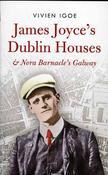
The new edition of this classic, richly illustrated guidebook, first published in 1990, gives a wonderful contextual depth to the Dublin childhood and formative years of James Joyce, and to the Galway origins of his consort Nora Barnacle.
James Joyce’s Dublin Houses & Nora Barnacle’s Galway recreates with fascinating particularity the footfall and house-moves of a young Joyce and his extensive family (his father John changed addresses eighteen times between 1880 and 1904). Vivien Igoe takes the reader on this journey, pinpointing the locale of Joyce’s real and imagined lives, mapping each work – from Stephen Hero to Finnegans Wake, by way of Dubliners, A Portrait of the Artist as a Young Man and Ulysses – onto the town and people its author loved so well.
From cityscape to mindscape, we witness the transformation of character and place, as Stephen Dedalus, Leopold and Molly Bloom walk again the streets of Dublin and Galway.
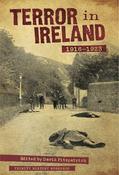
The practice of terror in Ireland during the revolution remains a highly controversial topic, which seldom receives either balanced or dispassionate treatment. This collection of essays is designed to illuminate the varied origins, forms and consequences of terror, whether practised by republicans or forces of the Crown. It is the fifth production of the Trinity History Workshop, an informal group of academic historians, research students, and undergraduates associated with Trinity College, Dublin. The Workshop’s reputation was established in 1986 by its first collection, Ireland and the First World War, subsequently reissued by The Lilliput Press.
The current volume is dedicated to the memory of a distinguished former member, the late Peter Hart, whose studies of both revolutionary and counter-revolutionary terror continue to arouse lively and sometimes intemperate debate. Several chapters emerged from papers delivered at a one-day conference in Trinity College in November 2010, while others have been specially commissioned for this book. The contributors, including gifted postgraduate and undergraduate students as well as prominent historians, tackle many facets of terror, such as ‘Bloody Sunday’, the Kilmichael Ambush and the Sack of Balbriggan. Scholars, students, political activists and all those interested in the Irish Revolution will find both provocation and enlightenment in this book.
The purpose of Terror in Ireland is not to assign blame to one party or another, but to offer varied perspectives on one of the most contentious periods of Irish history. The book is enhanced by illustrations, maps and charts.