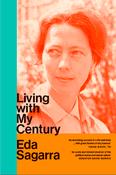
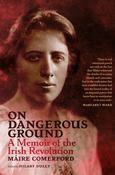
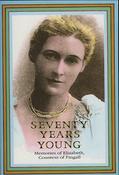
Professor Eda Sagarra, born in 1933, has been a significant and influential figure in Irish and European academic policy-making, contributing to the early development of the Erasmus scheme. Now, aged nearly 88, this memoir gives striking evidence of her self-discipline and formidable energy. This substantial memoir by one of the foremost female academics in Ireland starts with Sagarra’s own perspective on committing her life story to history during the pandemic lockdown of 2020.
A south Dublin convent girl, Sagarra probes childhood and family, schooling, and UCD — with a perceptive commentary on the Ireland of the 1930s and 1940s. Her remarkable memory and shrewd eye for detail present at times a painfully honest account of family and in the upper middle-class world of Catholic south Dublin, revealing the profound influence of Europe during her postgraduate years in post-war Germany, Switzerland and Austria.
Running through this forensic account of her academic life is a keen awareness of the constant if subtle barriers to female advancement.For contemporary critics reconstructing the history of gender equality in Ireland and for readers of feminist history, this makes for essential reading. Her description of retirement since 1998 is colourful, poignant and revealing, and her reflections on old age and youth resonate.
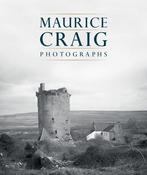
For fifty years, architectural historian Maurice Craig carried a camera nearly everywhere he went. Meticulously catalogued, the resulting collection of over two thousand photographs was donated to the Irish Architectural Archive (IAA) in 2001. During his final year, Craig selected seventy-odd of his favourites, adding comments in his wry, incisive style.
Many photographs here originally featured in the IAA 2006 exhibition ‘Maurice Craig: Fifty Years of Photographing Ireland’; others appeared as small prints in Ireland Observed (1980), co-authored with the Knight of Glin. Here, they are grouped into four categories: buildings that no longer exist; tableaux of a byone age; curiosities, such as arresting stone carvings and plaster work, or humourous juxtapositions; and buildings of enduring architectural interest.
With an introduction by the photographer and an afterword by Rolf Loeber, this book is part memento mori, part historical document – a tribute not only to Ireland’s buildings and architecture, but also to one of their greatest champions.