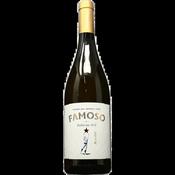
Country: South Africa
Varietal: Shiraz
Colour: Red Style: Dry
Producer: False Bay Vineyards
Description:
THE MISSION – Named after South Africa’s most iconic bay, which frames the country’s premium winelands, False Bay Vineyards was borne out of a desire to make ‘real’ wine affordable. Back in 1994, long before founding Waterkloof – his biodynamic vineyard overlooking False Bay- Paul Boutinot came to The Western Cape to seek out and rescue grapes from old, balanced and under-appreciated vineyards. These treasures were otherwise destined to be lost in the large co-operative blends that were dominating South Africa’s wine industry back then. Unusually for that time, Paul transformed those cape gems into wines with a minimum of intervention: Wild yeasts ferments, no acid additions…you know the drill. A familiar story to many ‘real wine’ lovers now, but back then he was swimming against the tide. Even today, making wine this way at the price-level is almost unheard of. Today the simple recipe remains the same: Fantastic coastal fruit, naturally balanced grapes and wild yeast ferments abound, with additions avoided
Tasting Note:
Very smart varietal Shiraz, savoury but polished and seriously appealing. Dark garnet with a violet rim. Fresh lifted berry fruit that draws you in! Full yet elegant with bramble aromas and cream, cassis and black cherry flavours on the palate with structure provided by fine tannins with a long rich, ripe finish.
Food Matches:
Grilled Lamb / Seafood / Risotto
Country: USA Region: Oregon, Willamette Valley
Varietal: Syrah
Vintage: 2017 Colour: Red Style: Dry
Producer: Qupe Vineyards
Description:
A California resident since childhood, Bob Lindquist named his winery “qupé” to honor the Chumash, the indigenous people of the Golden State’s Central Coast and Channel Islands.
Since many of the sounds of the Chumash language have been obscured by time, Bob gave “qupe” its pronunciation (“kyoo-pay”), with an accent on the final syllable.
In Chumash, “qupé” refers to the poppy, a flowering plant traditionally used for food and medicine.
In 1903 the California poppy (Eschscholzia californica) was officially designated the state flower, and every spring masses of the bright orange blossoms still blanket local hills and back country.
As Bob Lindquist and his wife, winemaker Louisa Sawyer Lindquist, prepared to plant the Sawyer Lindquist Vineyard (SLV) in 2005, they made a commitment to sustainable farming.
Their good friend Steve Beckmen (Beckmen Vineyards) had been growing superior fruit at his Purisima Mountain Vineyard using biodynamics – a system devised in the 1920s that treats the vineyard as a self-contained, living organism.
The couple was intrigued, despite the fact that so much about biodynamics seemed difficult to understand.
During the winter of 2004/2005, heavy rains delayed preparations for planting the vineyard and in May, Bob traveled to the United Kingdom on a pre-scheduled sales trip.
“Fate came into play,” Bob remembers. “My agent picked me up and said, ‘I hope you don’t mind, but Andre Ostertag and Dominique Lafon are doing a seminar on biodynamics this afternoon. Would you like to attend with me?’ I thought, ‘This was meant to be!'”
The seminar was an eye-opener for Bob, who then shared dinner and several bottles of wine with Andre and Dominique. The two explained to Bob that the best way to implement biodynamic techniques was to start before the vineyard was planted.
The next day over lunch, Bob questioned Andr