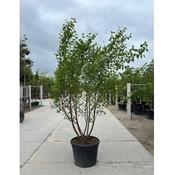
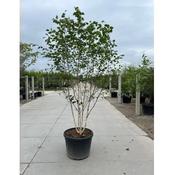
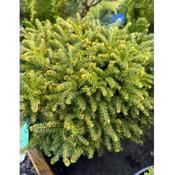
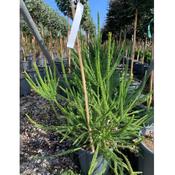
Liquidambar styraciflua 'Paarl' bears a strong resemblance to the species but is distinguished by a crown that is columnar to narrow pyramidal. The thick side branches grow upwards close to the trunk. Height 20 - 25 m. The trunk turns grey and has deep grooves. Young twigs are yellowish-green and turn reddish-brown.
The 5-lobed (sometimes 7-lobed) leaves are dark green, leathery and deeply incised. The autumn colour only appears at a late stage. The leaves turn yellow to orange. The brown spiky fruit capsules, measuring approx. 2.5 cm, appear following the unremarkable flowering.
They remain hanging in the tree for a long time. This cultivar was discovered by the Lappen tree nursery in Paarl, South Africa, and has been cultivated from about 1990. Winter hardiness zone: 5b
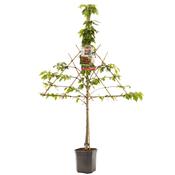
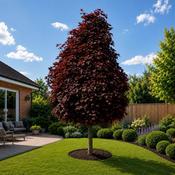
Fagus sylvatica Purpurea pendula, commonly known as Weeping Purple Beech, is a deciduous tree with a striking dark purple foliage. The leaves of the tree are narrow, deeply-lobed and have a glossy texture. The tree is slow-growing and can reach a height of up to 10 metres. It is often used as an ornamental tree in gardens and parks due to its attractive foliage.
Why we like it:
Striking purple foliage adds visual interest to any garden or landscape.
Slow growth rate makes it a low-maintenance tree.
Provides excellent shade during summer months.
What to know:
The tree prefers well-drained soil and partial shade to full sun exposure.
Regular pruning is necessary to maintain its weeping habit and prevent it from becoming too tall or wide.
The tree does not produce any significant flowers or fruits, and its primary ornamental value is derived from its foliage.
It is relatively resistant to pests and diseases, but can be susceptible to aphids and spider mites.
The best time to prune the tree is in late winter or early spring before new growth appears.
Height and Spread: The Fagus sylvatica Purpurea pendula can grow up to a height of 10 meters with a spread of 4-6 meters when fully grown.