Fagus sylvatica 'Dawyck Purple' – Planting & Care Guide
About Fagus sylvatica 'Dawyck Purple'
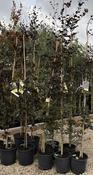
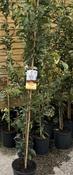
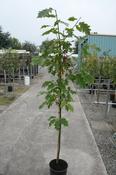
Fagus sylvatica 'Dawyck Purple', commonly known as Dawyck Purple Beech, is a striking deciduous tree prized for its narrow, upright columnar habit and rich purple foliage.
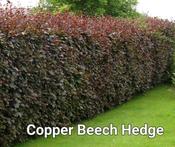
New leaves emerge in deep purple to burgundy shades during spring and retain their dark colouring through much of the growing season. In autumn, the foliage develops attractive bronze and copper tones before falling.
Unlike the broad-spreading habit of Common Beech, 'Dawyck Purple' grows strongly upwards, making it an excellent choice for gardens where horizontal space is limited but a tall architectural tree is required. Mature specimens generally reach around 10–15m tall while remaining approximately 2.5–4m wide.
Planting Guide
Plant in full sun or light partial shade.
Full sun generally produces the richest purple foliage.
Choose a position with sufficient overhead space for its eventual height.
Prefers fertile, moist but well-drained soil.
Suitable for clay, loam and sandy soils where drainage is adequate.
Avoid permanently waterlogged sites.
Dig a planting hole approximately twice the width of the root ball.
Plant at the same depth as previously grown.
Backfill, firm gently and water thoroughly.
Stake newly planted trees where necessary, particularly in exposed positions.
Apply an organic mulch around the base, keeping it clear of the trunk.
Care & Maintenance
'Dawyck Purple' requires relatively little attention once established.
Water regularly during the first 1–2 growing seasons.
Pay particular attention to newly planted trees during prolonged dry periods.
Keep an area around the base free from competing grass and weeds.
Apply an organic mulch each spring to conserve moisture.
Feed with a balanced fertiliser in spring if growth is weak.
Established trees generally require little additional feeding.
Pruning
Very little pruning is required because the tree naturally develops its d
Malus 'Gorgeous' – Planting & Care Guide
About Malus 'Gorgeous'
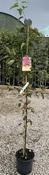
Malus 'Gorgeous', commonly known as Crab Apple 'Gorgeous', is a beautiful small deciduous tree valued for its abundant spring blossom and highly decorative bright red crab apples.
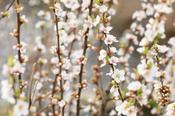
In spring, masses of white flowers opening from pink-flushed buds cover the branches, creating an impressive display and providing nectar and pollen for bees and other pollinating insects. These are followed by attractive red fruits in autumn, which stand out beautifully against the green foliage.
The crab apples are also suitable for making jellies and preserves, while fruit left on the tree provides a useful food source for garden birds.
Growing to approximately 3–4m tall and wide at maturity, 'Gorgeous' is an excellent ornamental tree for small and medium-sized gardens.
Planting Guide
Plant in full sun for the best flowering and fruit production.
Will tolerate light partial shade.
Prefers fertile, moist but well-drained soil.
Suitable for most garden soils, including clay and loam, provided drainage is adequate.
Dig a planting hole approximately twice the width of the root ball.
Plant at the same depth as the tree was growing previously.
Keep the graft union clearly above soil level.
Backfill, firm gently and water thoroughly.
Stake newly planted trees where necessary, especially in exposed gardens.
Apply an organic mulch around the base while keeping it away from the trunk.
Care & Maintenance
Malus 'Gorgeous' is relatively easy to maintain once established.
Water regularly during the first 1–2 growing seasons.
Water thoroughly during prolonged dry periods.
Keep the area immediately around young trees free from grass and weeds.
Apply a balanced fertiliser in spring if required.
Mulch annually with compost, well-rotted manure or other organic material.
Avoid piling mulch directly against the trunk.
Pruning
Crab Apples generally require little pruning.
Prune in late winter while dormant if required.
Remov