Devotional “occasions” or experiences by Irish Catholics form the foundation of this consummate anthropological study of Irish Catholicism. Lawrence Taylor’s twenty years of field work in Banagh in south-west Donegal have yielded rich ethnographic material that is illuminated by wide-ranging archival sources, vivid renderings of individual experiences, and sympathetic scrutiny of religious questions and theories.
In answering questions central to the study of religion (What is it? How do official and popular religions differ? What is the relation between power and meaning, and the roles of political and religious “regimes” in the social construction of religion?), Taylor draws upon two major theoretical traditions: that of Geertz, Durkheim and Turner, and that of Marx, Foucault and Asad. Basic fears and needs propel the people of south-west Donegal – and all of us, Taylor contends – to respond creatively to strong personal religious experiences and to invent forms to express them.
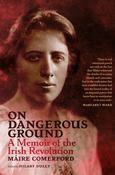
On Dangerous Ground is the revolutionary period memoir of Republican Máire Comerford (1893–1982). This striking memoir, one of the last of its era, includes Comerford’s original text, written mainly in the 1940s and ’50s, and new material unearthed from her extensive archive that also contains a wealth of photographs and memorabilia from the period.
The memoir begins with Comerford’s recollection of Sunday strolls to Avondale, former home of Charles Stewart Parnell, who was a neighbour of her father, the mill owner James Comerford. As a young woman, she experiences a ‘political awakening’ at the hands of a fierce Unionist woman in a secretarial college in London. Máire Comerford (the only Catholic in the class) begins to engage with Irish history books to counterbalance this brush with religious sectarianism. On her return to County Wexford to live with her mother’s people – a move necessitated by the family’s change of fortune – she re-enters the genteel world of fox hunting and luncheon parties. The memoir paints an intriguing picture of rural life of the time heralding the arrival of the motorcar, social and economic conditions, the rise of the Gaelic League, debates about Home Rule, and the First World War.
While the description of her surroundings as a young adult is intriguing and often charming, change is in the air in Ireland and a sharp and wide-ranging political analysis is ever present throughout her writing. Following Comerford’s witness account of Dublin during the 1916 Rising, she begins a life of political engagement, joining Cumann na mBan, Sinn Féin and the Gaelic League. In 1919, she moves permanently to Dublin to live with and work for renowned historian and nationalist, Alice Stopford Green. There, she becomes immersed in Republican politics and the War of Independence.
Comerford’s memoir gives voice to the experience of Republican women during revolutionary times, highlighting the immense contribution of women in the struggle for an Irish Republ