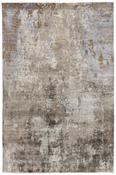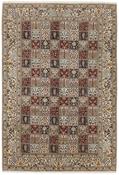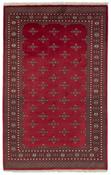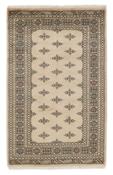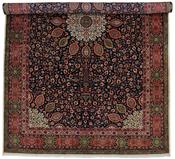
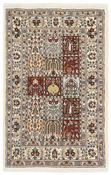
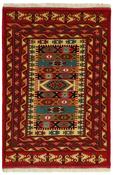
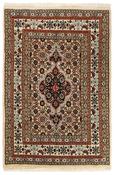
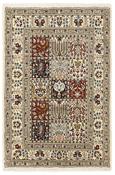
Tabriz is one of the most important cities in Iran. It has a population of 1,5 million people, and is the capitol of the East Azerbaijan province. As one of Persia’s biggest rug producing regions, Tabriz rugs are exported in all qualities, from the more simple to the most luxurious. The best qualities are divided into two main categories; the Tabriz Mahi, also known as “Tabriz fish pattern” (the rug’s leaf-shaped pattern is called Mahi, meaning “fish”), and the Tabriz Nagsheh, which means pattern. In this context, it refers to the figurative patterns and symbols from Keshan and Isfahan, which inspire the Tabriz Nagsheh rug. The knotters are incredibly skilled, and they have invented a special type of hook, which they can use instead of their fingers for knotting the knots. Warp and weft are cotton, and the pile is wool, often with silk woven into it in the finer qualities. The colours in the better rugs are fine and refined. The roughest qualities have bright colours and are rarely exported. Tabriz rugs are often given a number, such as Tabriz 50, which is an indication of quality. Tabriz 50 has 500.000 knots per m2. Rugs from Tabriz are regarded as being of a durable, very high quality.
Produced in accordance with the traditions of the old masters, place a unique piece of art in your home with this authentic Persian Keshan rug. The intricate design is composed of a large floral medallion surrounded by realistic floral, lotus and vine motifs. The borders of Keshan designs carry particular significance. This border is notably embellished with a mixture of lotus motifs as well as arabesque forms. Carrying a refined sense of opulence and grandeur, this rug is particularly well-suited for living rooms, bedrooms and foyers.
Handknotted from pure wool in rich shades of red and blue, this large area rug is luxuriously soft underfoot with a voluminous pile. Durable and hard-wearing, this rug is a worthy investment piece that is certain to be in your home for years to come.